
Sample House Design and Drawings: Following are sample drawings for our completed project on Floor Plans of a House
Floor plans of a house | Components of architectural drawings – sample floor plan with dimensions
For ease of understanding of the deliverables set, we have divided the deliverable into categories with similar offerings. These constitute the floor plan of the house, as well as other details such as structural drawings, service details, elevation and 3d views
Know more about Single Floor Plan House Designs
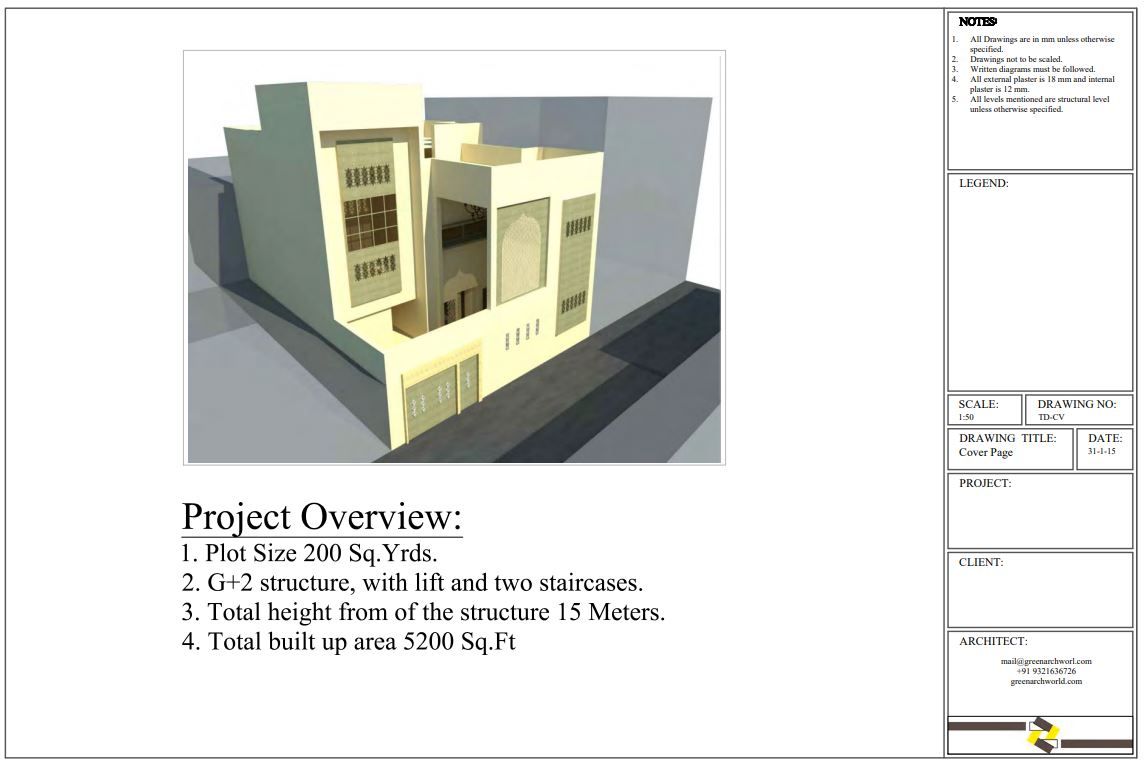
Drawings #01 – Cover sheet with project details and area statement
This is the introductory sheet. Important to note in this part of the submission are the area statements. All calculations such as the cost of construction or of a specific activity are based on the numbers based on the area statement. Area statement reflects many efficiency or inefficiency of the design. Important to note is that when comparing 2 projects of similar nature and design the best return on design is from the design which has maximized the key factors such as carpet areas, over common areas to give one example.
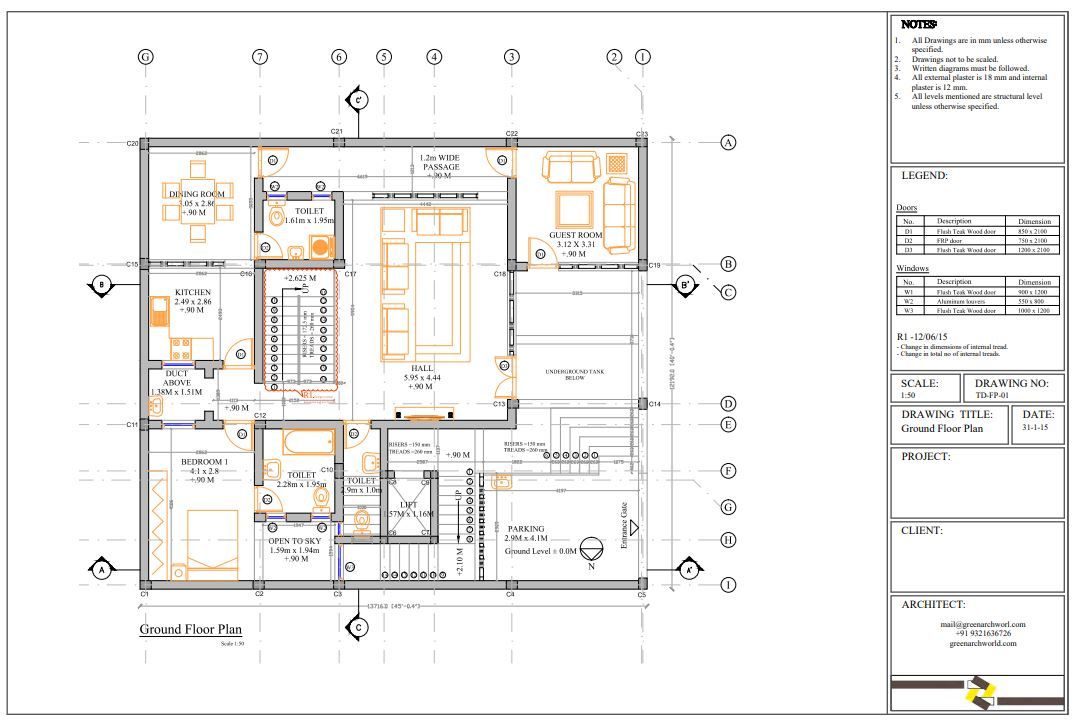
Drawings #02 – All floorplans with architectural details and furniture planning
This secion would cover all the floor plans that are developed for a project. Such as Typical floor plans, ground floor/stilt floor plans and other plans such as terrace and basement levels. A floorplan is a critical drawing important for optimising space and how one feels about a space.
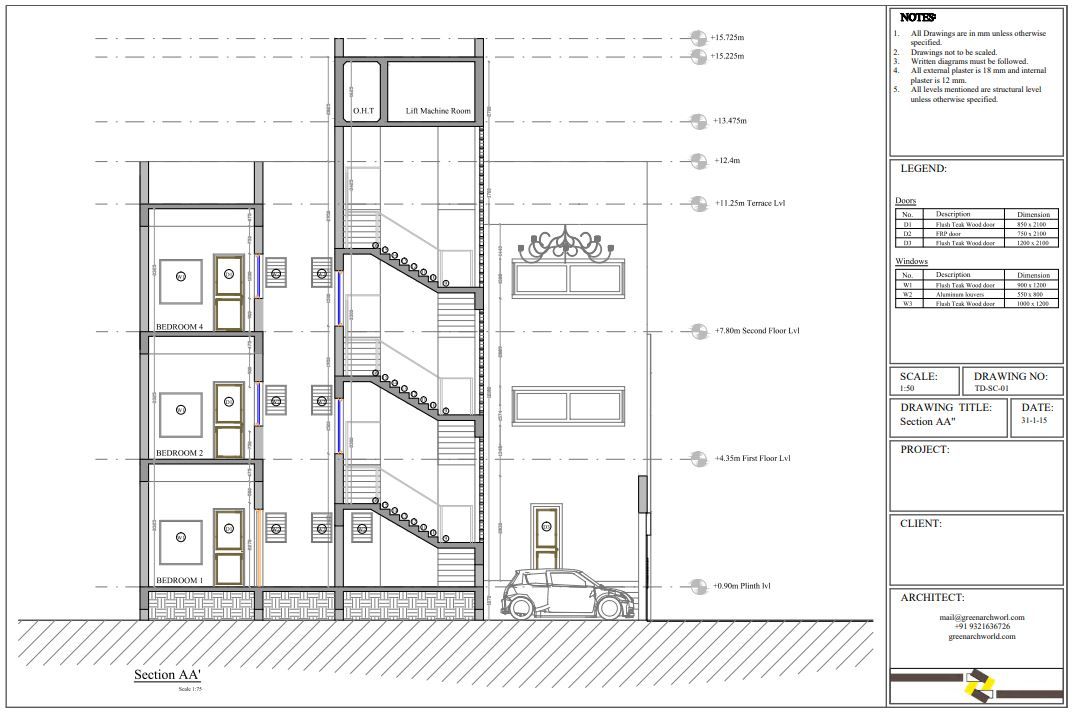
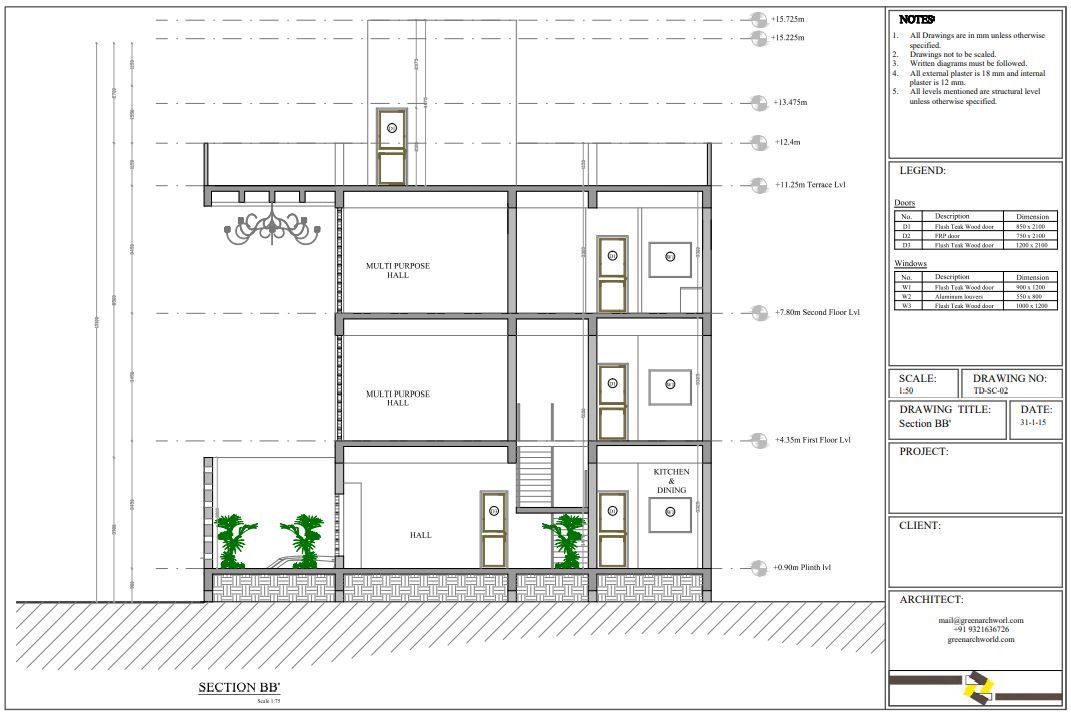
Drawings #03 – All building sections through key locations of design such as lifts, shafts and key design elements
A building section is a very important piece of drawing, even more so relevant for projects involved with different levels between two floors. The section is useful for understanding cantilevers, overhangs and double-height spaces.
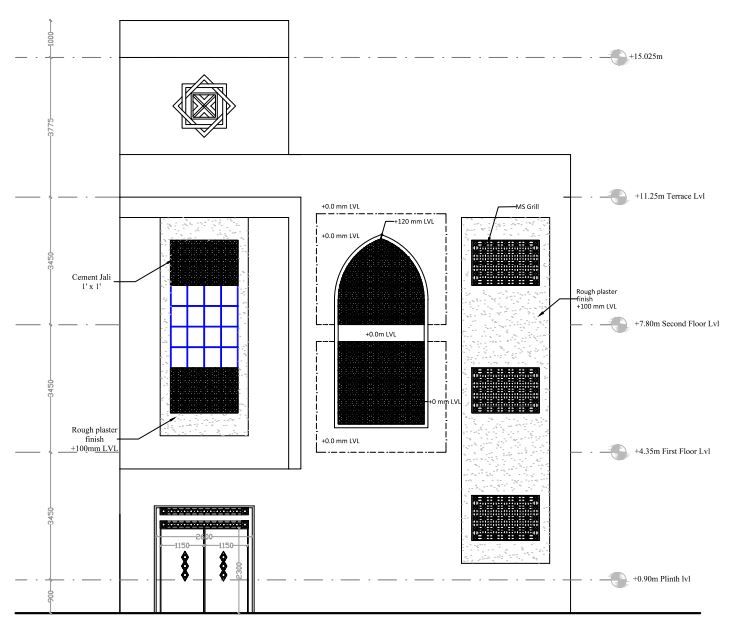
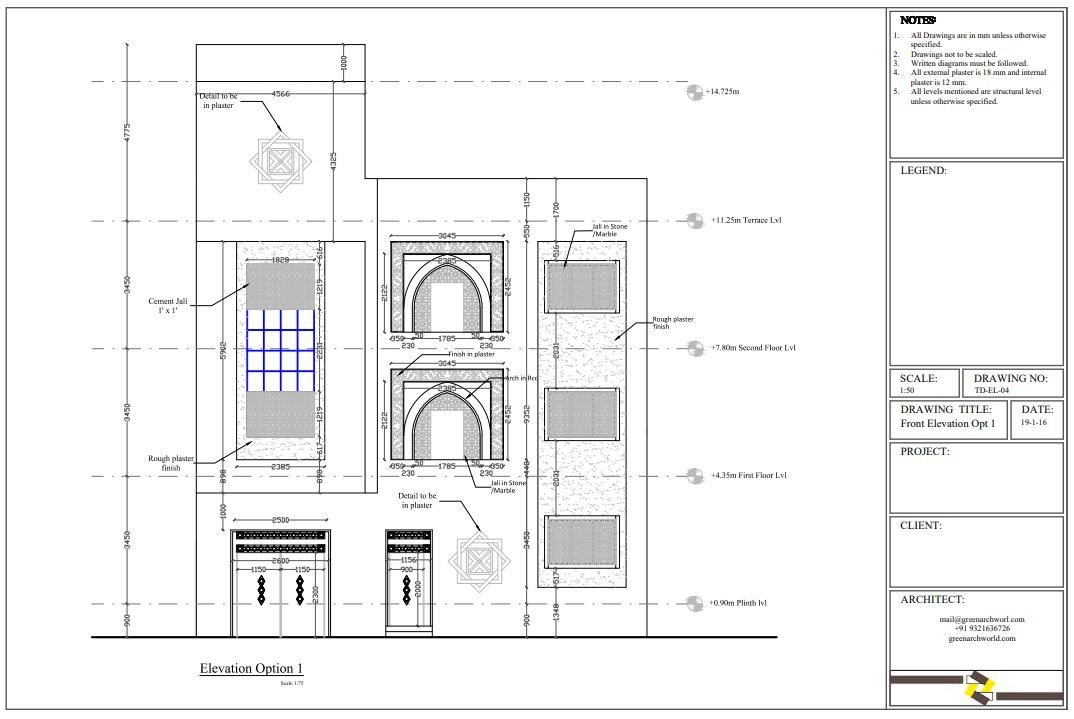
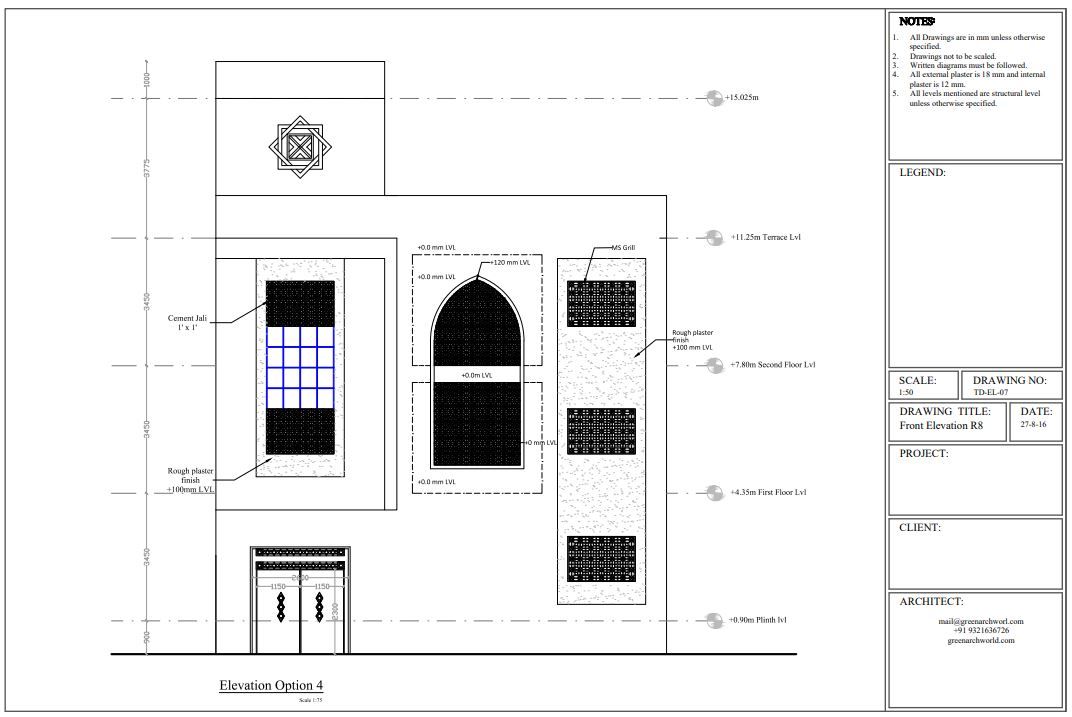
Drawings #04 – Elevation design options and intent
With 3d based visualisation techniques, elevation drawings are paid a little less importance but please be aware with a 2-dimensional architectural elevation it will be very difficult for the contractor/builder to actually construct the elevation.
Drawings #05 – Detail drawings such as doors, windows, metal works, inbuilt shelves etc.
Deliverables in this section of detail drawings would depend on a project to project basis. However, some common drawings which are part of all residential projects would be doors, windows, staircase drawings.
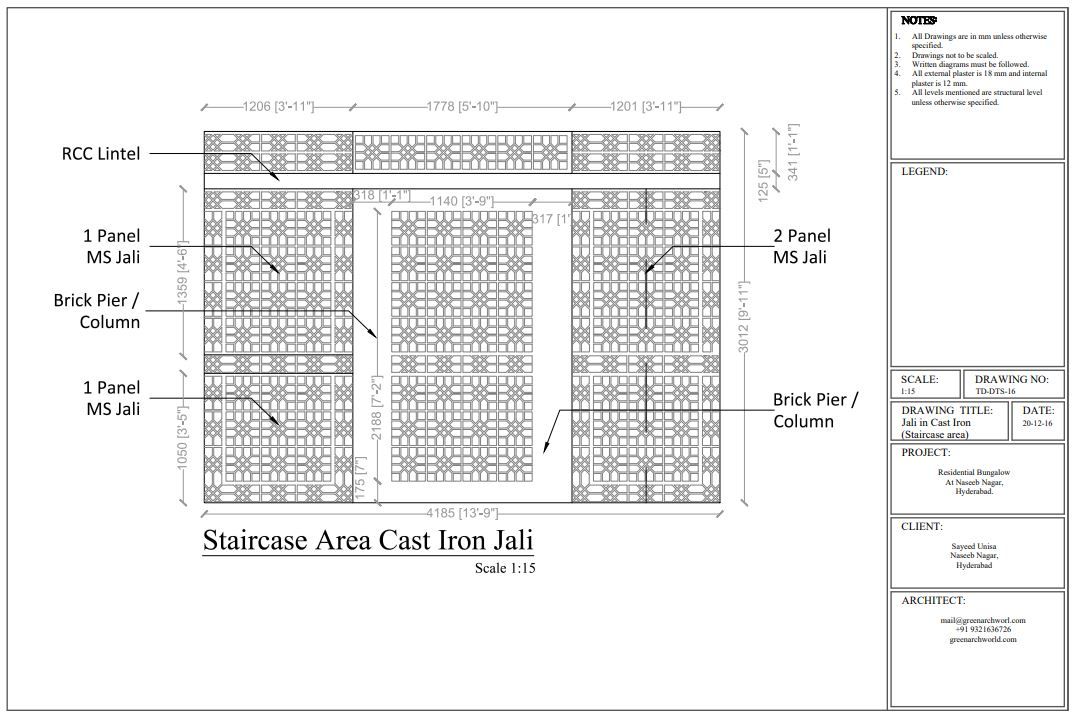
Learn more about Jali Design for Front Elevation – GRC Jali
Drawings #06 – Plumbing design intent (to be detailed further by plumbing contractor)
This section of drawing is an intent drawing for the contractor or service consultant to work further on. This is basic detailed by an architect so that there is no clash with other services or more importantly other architectural functions or spaces.
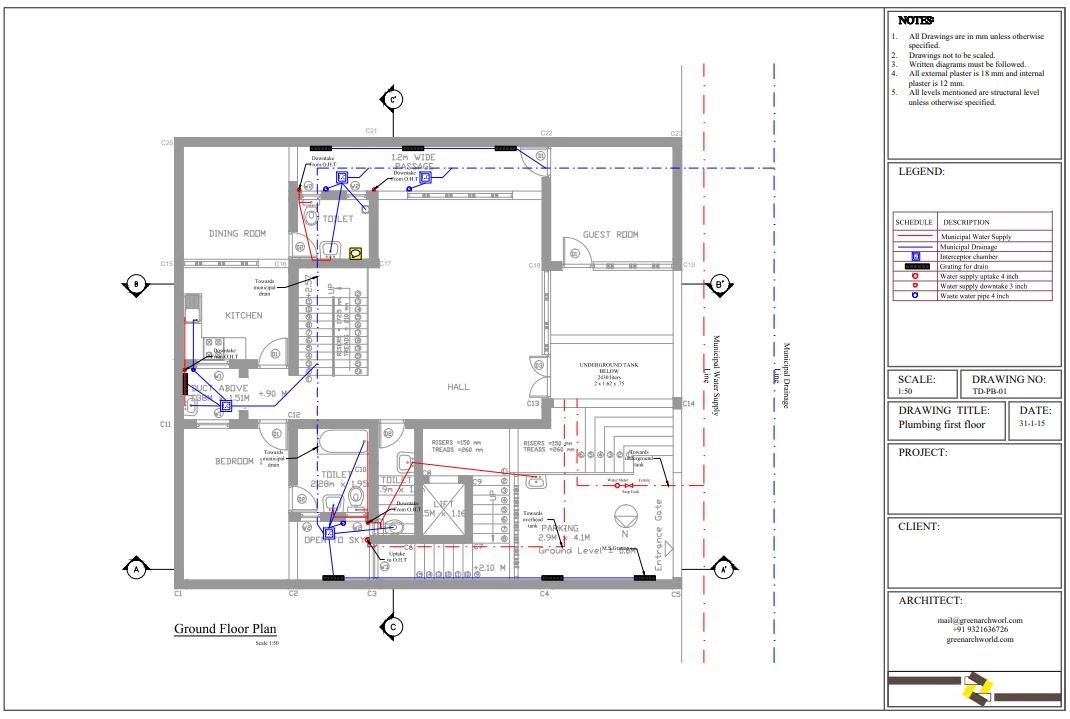
Drawings #07 – Electrical design intent (to be detailed further by Electrical contractor)
Similar to the intent drawing submitted for plumbing detail. However, the key differentiator would be location and setting out of switches should be provided by an architect. This is so as to have the correct interior alignment of furniture placement.
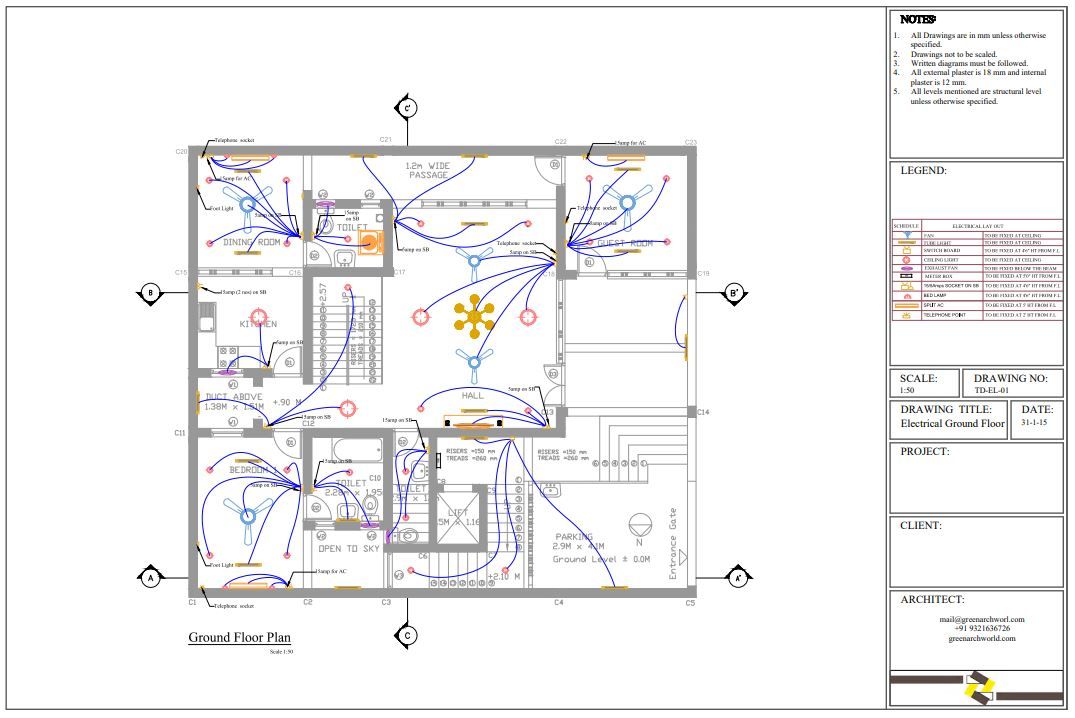
Drawings #08 – Structural design intent (to be detailed further by the structural consultant)
The house plans grid i.e column location and required slab sizes should be provided by the architect. Important to note in this requirement is the beam thickness, this has to be carefully monitored in the plan so that there are no offsets inside the house. And the interior of the home is with a clean and straight wall.
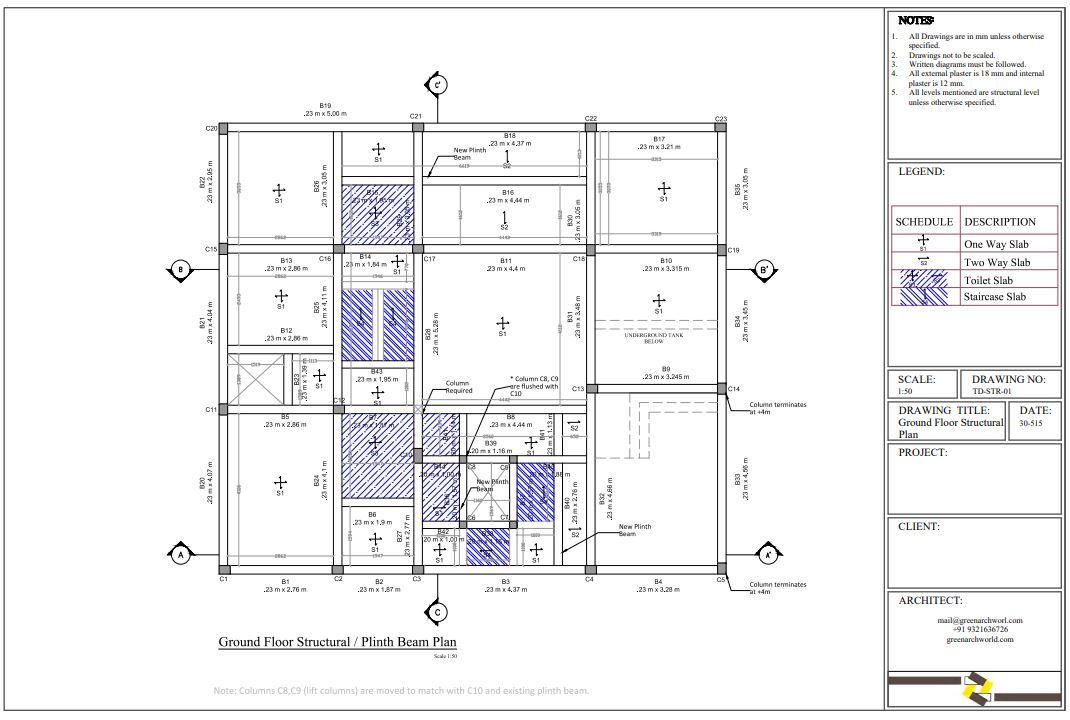
They were sample drawings with dimensions for our project completed in 2018. You may download these floor plan of a house that you have just seen along with other floor plan samples drawing.
Also explore on House Plan: Choosing between 1000 sqft and 2000 sqft options
For a detailed review on AI Floor Plan Generators in an Architect’s view, click here.
How to Read and Use a House Floor Plan
A floor plan is one of the most fundamental documents in any residential project, yet it is often misread or underutilised by clients and first-time home builders. Understanding what you are looking at — and how to extract meaningful information from it — can significantly improve your decision-making throughout the design and construction process.
At its most basic level, a floor plan is a scaled top-down view of a building cut horizontally, typically at around 1 metre height from the floor. This cut reveals the layout of walls, openings (doors and windows), room arrangements, and circulation paths. Dimensions annotated on the drawing correspond to internal clear dimensions unless otherwise stated — and it is always worth checking with your architect whether measurements are to the finished wall face or to the structural core.
When reviewing a floor plan, pay particular attention to the following:
- Room proportions: A bedroom measuring 3m x 3.5m will feel very different from one that is 2.4m x 4.3m, even if the area is similar. Proportions influence furniture placement and how spacious a room feels in daily use.
- Circulation and flow: Trace the path from the entry to the kitchen, from the bedroom to the bathroom, and from common areas to private zones. Good design ensures these paths are logical, short, and do not cross through other rooms unnecessarily.
- Door swing directions: Doors that swing into a room can obstruct furniture or pathways. Always check that doors open in a direction that makes practical sense for the space.
- Natural light orientation: Understanding which direction the plan faces (north, south, east, west) will help you anticipate which rooms receive morning light and which remain cooler through the day — critical for both comfort and energy efficiency.
If you are working with a 1000 sqft or 2000 sqft budget, the floor plan becomes even more critical in determining what is achievable. Read more on choosing the right house plan size for your project.
Floor Plans in the Age of Digital and AI Tools
The way floor plans are designed, reviewed, and communicated has changed substantially over the past few years. What once required manual drafting on paper has moved first to CAD software, and now increasingly to AI-powered platforms that can generate layout options within seconds based on a simple set of inputs.
For homeowners and developers, this shift has real practical benefits. Early-stage planning — previously requiring a paid architectural consultation just to explore options — can now begin with tools that allow you to test different room configurations, check approximate areas, and visualise the space in 3D before committing to a design direction. These tools are particularly useful for briefing your architect, as they allow you to arrive at the first meeting with a clearer sense of what you want, rather than starting from scratch.
That said, AI-generated floor plans carry important limitations that every user should be aware of. They typically do not account for site constraints such as boundary setbacks, local building bylaws, structural requirements, or the specifics of plot orientation. They should therefore be treated as conceptual starting points rather than construction-ready documents. A licensed architect remains essential for translating those early ideas into a compliant, buildable design.
For a thorough breakdown of the leading AI floor plan tools available today — including their accuracy, cost, and suitability for different project types — see our detailed review: AI Floor Plan Generators: A Comprehensive Review.
From Floor Plan to Full Drawing Set: What Comes Next
The floor plan drawings shown in this project overview are just one component of a complete architectural drawing set. As illustrated in the sections above, a full submission for a residential project also includes sections, elevations, service drawings, and structural intent drawings. Each of these documents serves a distinct purpose and together they form the complete picture required for construction.
If you are at the stage of commissioning your own drawings, it helps to understand what a complete drawing set looks like — including what each drawing is used for, how architects organise the submission, and what questions to ask your design team. Our guide on Drawing of a House: Architecture Design Simplified is a good starting point for clients new to the process.
For larger or more complex residential developments — particularly where site feasibility and floor plan optimisation need to be assessed quickly across multiple unit configurations — technology platforms are now playing a significant role. Tools used in the residential development space can rapidly test how many units fit on a given plot and at what efficiency. Explore how such platforms are reshaping the planning process in our article on TestFit: What It Does, Where It Works, and Where It Falls Short in Residential Development.