

Dubai’s real estate market has undergone a remarkable transformation over the past few years, evolving from a skyline-driven city into a global hub for real estate investment and urban innovation. Between 2020 and 2025, the emirate experienced rapid growth in property values, land transactions, and large-scale developments. Strategic urban planning, strong government support, investor-friendly regulations, and continuous infrastructure investment have collectively strengthened Dubai’s position as one of the world’s most dynamic property markets. As international investors, entrepreneurs, and professionals continue to relocate to the city, demand for both residential and commercial real estate has increased significantly.
One of the most striking indicators of this transformation is the expansion of Dubai’s land market. According to research from JLL, the value of land transactions increased by 403.6% between 2019 and 2024, rising from AED 13.7 billion to AED 68.8 billion. The number of transactions also rose sharply from 691 deals to 1,991 transactions, highlighting growing investor confidence and strong development activity. The momentum continued into 2025, when land transactions in the first half of the year alone reached AED 43 billion, marking a 42.9% year-on-year increase. This surge reflects the increasing demand for development plots as Dubai expands into new residential and commercial districts.
Urban planning has played a critical role in supporting this growth. Instead of focusing only on high-rise developments in central areas, Dubai has encouraged the development of large master-planned communities that integrate housing, retail spaces, parks, healthcare, and leisure facilities. Infrastructure investment further supports this growth, with the government allocating approximately AED 39 billion toward infrastructure and construction projects in 2025, including roads, transportation networks, and utilities that improve connectivity and increase property values across the city.
Regulatory reforms have also strengthened Dubai’s real estate sector by making it accessible to global investors. Freehold ownership laws allow foreign buyers to purchase property in designated zones, which has significantly expanded the market. These freehold areas have performed particularly well, recording nearly 495.8% growth in transaction volumes, demonstrating strong international interest in Dubai’s property market.
Within the residential sector, property prices have risen steadily in recent years. Apartment prices across the city have increased by approximately 63.5% since 2019, while villa prices have grown even more dramatically by about 116.3%. This surge reflects changing lifestyle preferences, as many residents and investors seek larger homes and community-focused living environments.
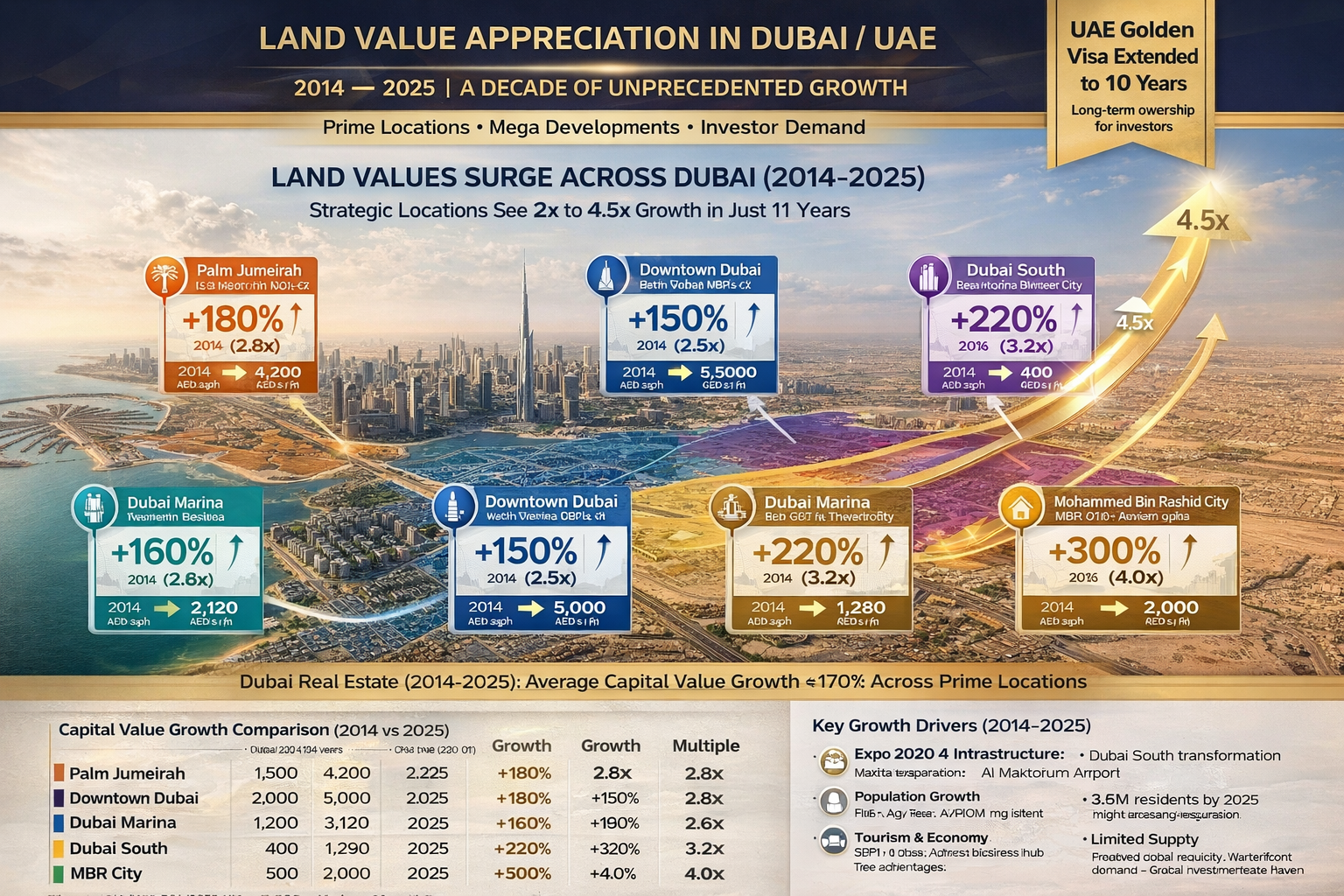
Several communities across Dubai have emerged as standout investment hotspots due to their strong price appreciation and lifestyle offerings. Among the most prominent is Dubai Hills Estate, where property prices rose from around AED 633 per square foot in 2021 to approximately AED 2,418 per square foot in 2025, representing an impressive 282% increase. The development’s integrated planning—combining green spaces, schools, retail centers, and a golf course—has made it one of the most desirable residential communities in the city.
Luxury waterfront destinations have also experienced exceptional growth. Palm Jumeirah, one of the city’s most iconic landmarks, recorded roughly 386% price growth over five years, reflecting strong global demand for luxury beachfront properties. Similarly, Jumeirah Bay Island has become one of Dubai’s most exclusive residential enclaves, attracting ultra-high-net-worth individuals seeking privacy and prestige.
Other emerging communities are also gaining momentum. Dubai Creek Harbour is rapidly developing into a large mixed-use district featuring residential towers, retail promenades, and waterfront public spaces. Meanwhile, areas such as Business Bay, Al Furjan, DAMAC Hills, Jumeirah Village Triangle, and Sobha Hartland have also recorded strong property value growth ranging between approximately 89% and 168% over five years, making them attractive options for both investors and homebuyers.
Another significant trend shaping the market is the rise of off-plan property investments. Developers increasingly offer flexible payment plans that allow buyers to invest in projects before completion. This model has encouraged early-stage investment and helped maintain strong liquidity in the market. At the same time, the luxury property segment has expanded rapidly, with transactions of homes priced above AED 10 million increasing from 469 deals in 2020 to nearly 6,000 transactions by 2025, reflecting the growing influx of global wealth into Dubai’s real estate market.
Looking ahead, Dubai’s real estate sector is expected to maintain strong long-term momentum. The city’s population is projected to reach approximately 5.8 million by 2040, which will significantly increase demand for housing, commercial spaces, and infrastructure. Combined with ongoing development projects, progressive regulations, and continuous infrastructure investment, this growth will likely sustain the expansion of the property market.
In conclusion, Dubai’s real estate transformation is not merely the result of market cycles but the outcome of long-term strategic planning and global investment appeal. From luxury waterfront islands to master-planned residential communities, the city continues to create diverse opportunities for investors while building a modern, resilient, and globally competitive urban landscape. As Dubai continues to grow, its real estate market is poised to remain one of the most influential and innovative property sectors in the world.